Subscribe to our newsletter
Be the first to get the latest refund protection insights
Other Articles
-
Stadiums or Stadia? Either Way, Getting There Is Half the Story
Sheila Simison -
The Hidden Cost of No-Shows: How Missed Bookings Are Reshaping Business Revenue (2026 Guide)
Patrick Curtis -
The Ski World Is Crying Out for Refund Protection
Patrick Curtis -
Why Travel Insurance Doesn’t Cover Everything
Patrick Curtis -
The Post-COVID Ticket Boom Is Triggering a Regulatory Response
Shaun Coyne -
The Simple Refunds Guide to Refund Protection
Patrick Curtis -
A Dog Basket Full of Reasons to Take Out Refund Protection
Sheila Simison -
The New Refund Economy: FlexibleBooking Policies Reshape Hotel Revenue in 2026
Patrick Curtis -
The Future of Hospitality: Growth,Innovation, and Guest-First Experiences in 2026
Patrick Curtis -
From Hotel Chambermaid to Simple Refunds Founder, Sheila Simison
Sheila Simison
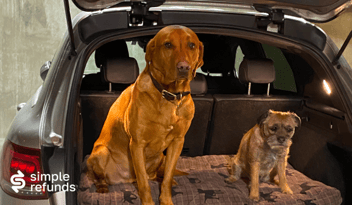
In the last year I’ve written about adverse weather, travelling with pets and the maze of new passport regulations. Last week, a simple car trip back from France with our dogs brought all of these potential hazards together in one unforgettable journey, and reminded me, yet again, why refund protection is no longer a “nice to have” but an absolute essential.
Our return trip could easily have been lifted straight from a refund handler’s case study.
We had a straightforward plan: a 1000km drive, a Channel crossing, and home. Sensible, organised, no drama. Or so we thought.
The first wobble came before dawn. We rose early to get ahead of the traffic, only to have our packing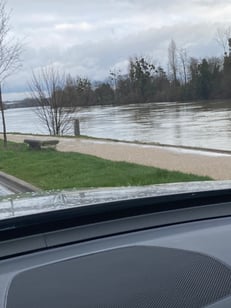 disrupted halfway through by a power cut. In pitch darkness, we resorted to phone torches, fumbling around suitcases and dog baskets, trying not to forget anything important. Leads? Check. Pet passports? Check. Chargers? Maybe. That half-hour delay felt manageable at the time, but it was the first domino to fall.
Once on the road, the weather took centre stage. South-West France was battling severe flooding. Torrential rain hammered down relentlessly as we drove north. Fallen trees and floodwaters blocked smaller roads, forcing diversions and slow manoeuvres just to reach the motorway. Another half-hour disappeared.
Surely the motorway would be smoother? Not this time. Spray from lorries reduced visibility to a grey blur and traffic crawled along cautiously. Then, in a heart-stopping moment, an articulated lorry jack-knifed on the opposite carriageway and smashed into the central reservation. Debris scattered across lanes, emergency services scrambled into action, and traffic ground to a near standstill. More delay. More tension.
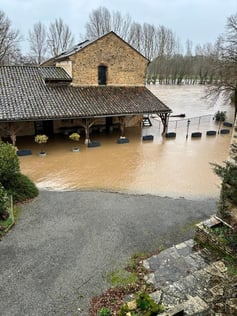
By the time we approached Paris, we were already well behind schedule. The Seine was swollen and close to bursting, prompting widespread diversions. Roads were closed, signage was confusing, and sat-nav recalculations became constant. Over an hour was added to the journey weaving through unfamiliar streets.
But the final hurdle proved the most frustrating of all. It was half term, yes, but should it really take two hours to clear French and UK border control? Only four desks appeared to be operating, and whether the bottleneck was staffing or the new digital EES entry/exit system, we’ll never know. What we do know is that our dogs sailed through the pet reception and passport portacabin in minutes, while we shuffled forward in a painfully slow queue for another two hours.
By the time we finally drove onto UK soil, we were exhausted, and very aware of how differently the day could have ended.
We were lucky. We were simply heading home. But imagine if we’d had a flight to catch, a wedding to attend, an exam to sit, or a cruise departure that wouldn’t wait. Each of those delays, power failure, extreme weather, motorway accident, flooding, border congestion, could easily have caused a missed connection or a forfeited booking.
And that’s where refund protection becomes more than a small add-on.
Refund protection is about removing the financial sting when events beyond your control derail carefully laid plans. Weather patterns are becoming more extreme. Border processes are evolving. Road congestion is unpredictable. Industrial action, IT failures, medical emergencies, all increasingly common. Even the most organised traveller cannot control these variables.
When you travel with pets, children, tight schedules or prepaid experiences, the stakes are even higher. Accommodation deposits, ferry crossings, flights, event tickets and holiday packages often operate under strict cancellation terms. Without protection, a delay can quickly turn into a significant financial loss.
A simple refund protection programme acts as a safety net. It offers reassurance that if circumstances spiral, as they so easily can, you won’t be left out of pocket. It turns “What if?” into “We’re covered.”
Looking back on our rain-soaked, diversion-filled, border-queue marathon, I’m grateful we weren’t racing against a departure clock. But relying on luck is not a strategy.
If the last few years have taught us anything, it’s that travel disruption is no longer the exception, it’s part of the landscape. So before your next trip, whether it’s a quick hop across the Channel or a long-haul adventure, consider adding refund protection to your plans.
Because sometimes, a dog basket full of good intentions isn’t enough
Post comments
Latest insights
Explore the latest news and insights on refund booking protection, from our team of dedicated experts

Stadiums or Stadia? Either Way, Getting There Is Half the Story
Stadiums or stadia, which is correct? The answer is simple: both are perfectly...
 5 April 2026

The Hidden Cost of No-Shows: How Missed Bookings Are Reshaping Business Revenue (2026 Guide)
Every Empty Seat Has a Cost
Every empty seat tells a story.
- A missed appointment.
- 30 March 2026

The Ski World Is Crying Out for Refund Protection
After a few weeks on the slopes, filled with burnt noses, questionable après-ski...
- 20 March 2026